
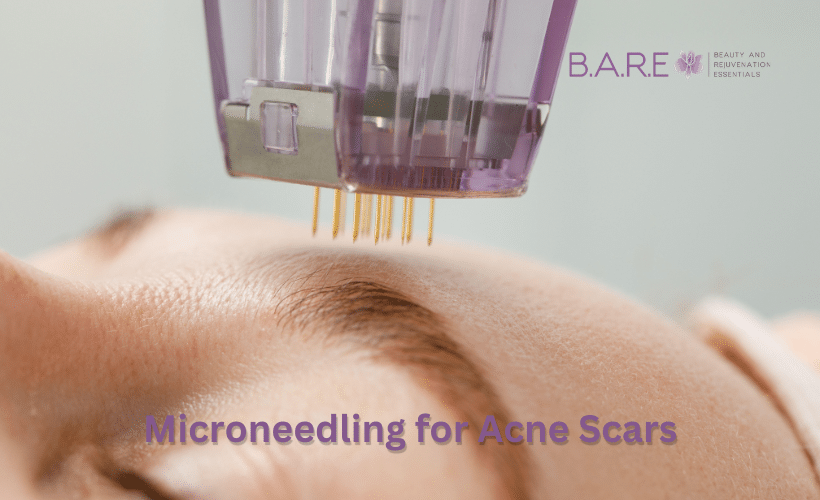
Microneedling for acne scars is one of the most common skin concerns clients bring to B.A.R.E. Essentials Spa. Almost everyone who asks about it also asks about laser therapy. Both treatments do the same job. They injure the skin in a controlled way, and the body answers by rebuilding collagen, which lifts sunken scars and smooths skin texture. What separates them is how deep each one reaches and how much recovery it costs you. This guide compares skin needling against ablative lasers and non-ablative lasers so you can pick an acne scar removal plan that suits your skin and your calendar.
How Acne Scarring Forms
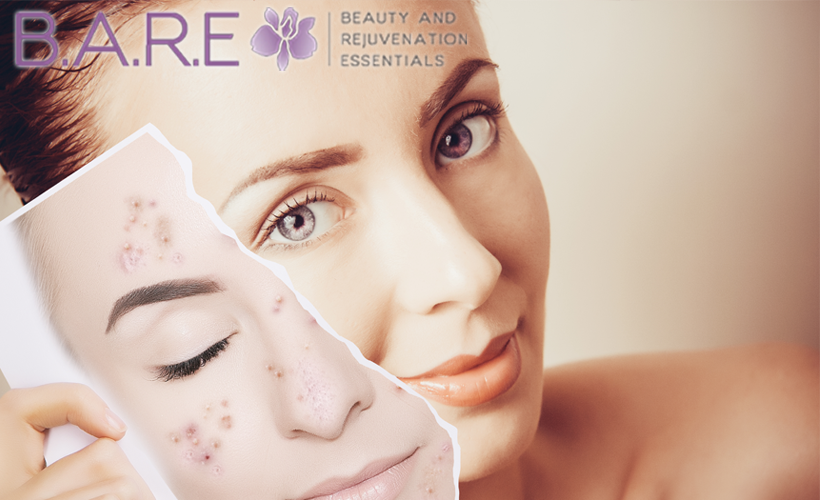
Acne scarring starts when a deep breakout bursts the wall of a pore. Trapped sebum and bacteria push inflammation into the surrounding skin layers. The body patches the damage with scar tissue, and that patch is rarely even. Too little collagen leaves a dent. Too much collagen builds keloids or hypertrophic scars, which sit raised above the skin around them.
Creams cannot fix either result. Topical skincare works on the outer layer, and acne scarring sits well below it. Every real method of acne scar removal solves the problem the same way. It makes tiny, controlled wounds in the dermis, and those wounds switch on cell growth, collagen production, and elastin production. Microneedling and laser therapy both pull that trigger. They differ in depth, in heat, and in downtime.
Scar Types a Skincare Specialist Will Identify
Naming your scar type matters more than picking a device. A dermatologist or trained skincare specialist looks for these:
- Rolling scars: Wide, shallow dips with soft edges, often anchored to scar tissue underneath
- Boxcar scars: Round or oval craters with steep, sharply defined walls
- Ice pick scars: Narrow punctures that reach deep into the dermis
- Keloids and hypertrophic scars: Raised skin irregularities built from excess collagen
- Post-inflammatory hyperpigmentation: Flat brown or red marks left behind after a breakout, which is discolouration rather than true scarring
Microneedling as Collagen Induction Therapy
Microneedling also goes by skin needling or collagen induction therapy. A handheld pen carries fine sterile needles that stamp thousands of micro-holes across the treatment area. Each channel is a small wound. The body responds by laying fresh collagen in that exact spot, so depressed acne scarring gradually rises and skin texture evens out.
The pen produces no heat, and that one fact decides who qualifies. Heat is what pushes pigment cells to overreact. Without it, needling stays safe on every Fitzpatrick skin type, including deeper tones that face a real risk of post-inflammatory hyperpigmentation from laser therapy. Plan on 3 to 6 sessions, four to six weeks apart. Collagen keeps building for months after the last one. Our guide to maximizing microneedling results covers the aftercare that protects that work.
Where RF Microneedling Fits
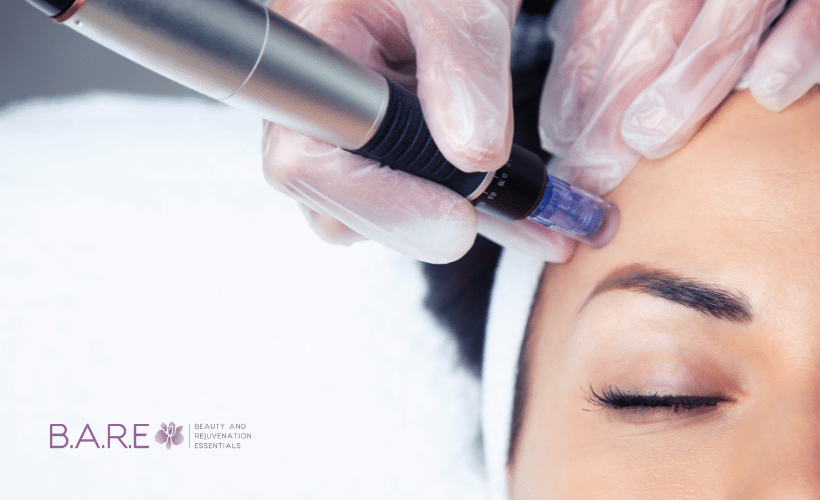
RF microneedling sends radiofrequency energy through the same needles. The radiofrequency current heats tissue below the surface while the needles handle the top layer. This lets RF microneedling reach deeper than plain needling without stripping the surface, which places RF microneedling between standard needling and ablative lasers in strength. Because the heat travels underneath rather than across, RF microneedling treats medium and deeper skin tones more gently than ablative lasers do. It still calls for a proper consultation first.
Downtime and Bruising
Recovery from standard needling is short. Expect one to three days of redness like a mild sunburn, plus pinpoint bruising over bony spots such as the jaw and forehead. RF microneedling asks for more, usually three to five days, with extra swelling and bruising. Skip retinoids, acids, and direct sun for a week.
Ablative Lasers and CO2 Laser Resurfacing
Ablative lasers remove the outer skin layers outright and force the dermis to rebuild underneath. The carbon dioxide laser is the strongest of them. CO2 Laser Resurfacing produces the largest single-session improvement available for deep boxcar and ice pick scars. A fractional CO2 laser eases the trade-off by treating narrow columns of tissue and leaving healthy skin in between, which speeds healing.
Er:YAG lasers are the gentler ablative choice. An Er:YAG beam is absorbed closer to the surface, so it removes tissue with less leftover heat than a carbon dioxide laser. Practitioners often choose Er:YAG for moderate scarring and surface sun damage, where full CO2 Laser Resurfacing would be more than the skin needs. Fractional Laser Technology of either type costs more recovery than needling, usually five to ten days of peeling and swelling. B.A.R.E. Essentials Spa offers fractional laser skin resurfacing, and our explainer on what fractional skin resurfacing involves walks through a visit.
Non-ablative Lasers
Non-ablative lasers heat the dermis but leave the surface intact. An Nd:YAG beam reaches deep and also treats broken capillaries and background redness, which often travel alongside acne scarring. Non-ablative lasers need more sessions than a fractional CO2 laser, though they cost far fewer recovery days.
Fitzpatrick Type, Sun Damage, and Pigment Risk
Your Fitzpatrick skin type drives the safety decision more than your scar depth does. Ablative lasers raise the odds of post-inflammatory hyperpigmentation on medium and deeper tones, and existing sun damage raises them further. Anyone recommending ablative lasers should first review your acne history, your current medications, and your past sun damage.
A few situations belong with a dermatologist rather than a spa. Recent isotretinoin use, active skin infection, and a personal history of keloids all warrant a dermatologist visit before any resurfacing. Sun protection during healing is not optional either, because fresh sun damage on healing skin can undo months of progress. Our acne scar laser treatments in Windsor overview explains the order to follow.
Comparing the Options Side by Side
- Speed: Laser therapy changes more per session. Microneedling builds up across a series.
- Downtime: Needling costs one to three days. Ablative lasers cost five to ten.
- Skin tone: Needling suits every Fitzpatrick type. Ablative lasers need a case by case call.
- Cost and comfort: Standard needling is cheaper and more comfortable. CO2 Laser Resurfacing needs stronger numbing and costs more per session.
No single option wins outright for acne scar removal. Most faces carry mixed acne scarring, with soft rolling dips across the cheeks and sharper craters near the jaw. Matching each scar type to the right tool beats committing to one device, which is also why an acne scar removal quote based on photos alone is rarely accurate.
Subcision and Combined Treatment Plans
Some rolling scars refuse to lift no matter how much collagen you build, because fibrous bands tie them to the tissue underneath. Subcision releases those bands. A practitioner slides a fine instrument beneath the scar and frees it so the dent can rise. Subcision is a minor medical procedure, so it belongs with a physician or dermatologist rather than a spa.
Staged plans are common, and subcision usually comes first. Release the tethered scars, then rebuild the surface with laser therapy or needling. Platelet-rich plasma is sometimes applied alongside needling to support healing. Light chemical peels can clear leftover pigment between sessions, while dermabrasion has largely given way to fractional devices that offer more control. Some clients add intense pulse light for broader skin rejuvenation, since pigment and texture are separate skin concerns. Any skin rejuvenation plan, subcision included, waits until active breakouts have settled.
Serving Windsor and the Surrounding Region
Our clinic treats clients from Windsor, Tecumseh, LaSalle, Lakeshore, and across Essex County. Every consultation includes a Fitzpatrick assessment, a review of your skin history, and a written plan with session counts and spacing. You can browse our full range of aesthetic services before you visit.
Book Your Acne Scar Consultation at B.A.R.E. Essentials Spa
Choosing between microneedling for acne scars and fractional laser therapy gets much easier once a trained practitioner has seen your skin in person.

B.A.R.E. Essentials Spa will identify your acne scarring, confirm what your skin tone safely allows, and build an acne scar removal plan around the recovery time you can realistically take. Call today to book your consultation.